Upper Paleolithic Technology Is Known For . The upper paleolithic (or upper palaeolithic) also called the late stone age is the third and last subdivision of the paleolithic or old stone age.very broadly, it dates to between 50,000 and 12,000 years ago (the beginning of the holocene), according to some theories coinciding with the appearance of behavioral modernity in early modern humans, until the advent of the neolithic. 12,000 years ago, with part of its stone tool culture continuing up until c. Paleolithic bone tools found from South China from phys.org 12,000 years ago, with part of its stone tool culture continuing up until c. U pper paleolithic social changes. The art of the upper paleolithic represents the oldest form of prehistoric art.
Get link
Facebook
X
Pinterest
Email
Other Apps
Lower Paleolithic Technology
Get link
Facebook
X
Pinterest
Email
Other Apps
Lower Paleolithic Technology. 99% of the period of human technological prehistory. In africa, where the earliest humans arose, the early stone age begins some 2.7 million years ago, with the earliest stone tools recognized to date in the olduvai gorge of east africa.
Our Earliest Technology? Brewminate from brewminate.com
Using a bowl shaped piece of stone, a heavy and bold tool was created. 10,000 years ago in some areas. Adults are overweight or obese [body mass index (bmi) > 25 kg/m 2].
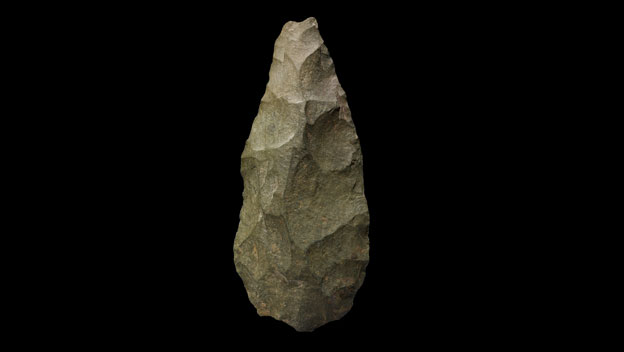
Using a bowl shaped piece of stone, a heavy and bold tool was created.
99% of the period of human technological prehistory. Chopper and chopping tool are characteristic of lower palaeolithic. About 99% of human history happened in the palaeolithic.
The lower paleolithic, middle paleolithic and upper paleolithic, each marking advances (especially in tool technology) among different human cultures.
It extends from the earliest known use of stone tools by hominins c. In his 1969 paleolithic stone tool taxonomy (still widely used today), grahame clark defined levallois as mode 3, flake. While the earliest sites with these tools are from the gona river region of ethiopia, simple tools of this kind were first discovered by mary and louis leakey associated with homo habilis at olduvai gorge in.
12,000 years ago, with part of its stone tool culture continuing up until c.
Only one side was worked on (unifascial). 10,000 years ago in some areas. Adults are overweight or obese [body mass index (bmi) > 25 kg/m 2].
A brief treatment of weaving follows.
The palaeolithic (or paleolithic) was a period of prehistory when humans made stone tools.it was the first and longest part of the stone age.it began around 3.3 million years ago and ended around 11,650 years ago. The first unquestionable stone tools were evidently made and used by early transitional humans and possibly australopithecus garhi in east africa about 2.5 million years ago. The palaeolithic began when hominids (early humans) started to use stones as tools for bashing, cutting, and.
Overweight and obesity are associated with a number of chronic diseases, including type 2 diabetes, metabolic syndrome, hypertension,, and cardiovascular disease (cvd)., even modest weight loss—5% decrease in body weight—has been shown to.
Same as the chopper but with 2 edges worked on (bifascial). The lower paleolithic (or lower palaeolithic) is the earliest subdivision of the paleolithic or old stone age.it spans the time from around 3 million years ago when the first evidence for stone tool production and use by hominins appears in the current archaeological record, until around 300,000 years ago, spanning the oldowan (mode 1) and acheulean (mode 2) lithics industries. In africa, where the earliest humans arose, the early stone age begins some 2.7 million years ago, with the earliest stone tools recognized to date in the olduvai gorge of east africa.
Paleolithic Technology Pdf . Winemaking, science and technology have interwoven histories and have grown together over the millennia, benefiting from each other. 99% of the period of human technological prehistory. (PDF) The South Asian Microlithic Homo sapiens Dispersal or Adaptive Response? from www.researchgate.net 99% of the period of human technological prehistory. Explore some examples of middle stone age tools. But in the early 20 th century kundiman had developed into art song.
Paleolithic Tools And Technology . 10,000 years ago in some areas. The palaeolithic (or paleolithic) was a period of prehistory when humans made stone tools.it was the first and longest part of the stone age.it began around 3.3 million years ago and ended around 11,650 years ago. Clovis People Crystalinks from www.crystalinks.com About 99% of human history happened in the palaeolithic. Carvings and paintings, kakadu lion man apollo 11 cave stones venus of willendorf hall of bulls, lascaux cave of altamira, northern spain rock art on the iberian coast rock drawings. Blades are stone pieces that are twice as long as they are wide and, generally, have parallel sides.
Two Examples Of Paleolithic Technology . During this time humans used stone to make tools and stone was used many times as part of the actual tool. The objective of tsu chu is to kick a ball through an opening in a small net and it is recognized by fifa as the earliest form of football (soccer).according to fifa, tsu chu was first mentioned as an exercise in a military manual dating back to the second and. Laisser un commentaire Annuler la réponse from www.yassirkhalilstudio.com Here is a brief chronological timeline: Paleolithic is a word that comes from the two greek words palaios, meaning old, and lithos, meaning stone. A brief treatment of weaving follows.



Comments
Post a Comment